
The Global Chess Game: How Geopolitical Moves Are About to Wreck (or Make) Your Portfolio
This article does not constitute investment advice, but is intended to educate and share experiences. Always do your own due diligence and consult a qualified professional before making any financial decisions. Investing in emerging technologies involves significant risk.
Plot twist: A railroad halfway across the world just became your biggest trade signal
Listen up, traders. While you’re busy watching your charts and arguing about whether Bitcoin’s heading to the moon or the basement, there’s a much bigger game happening. And this game? It’s about to shake up every single position in your portfolio.
What went down on June 13th between Israel and Iran wasn’t some random Middle East drama. It was a calculated move in the biggest trade war you’ve never heard of. And if you’re not paying attention, you’re about to get absolutely rekt.
Here’s the thing most retail traders miss: every geopolitical conflict is actually a trade setup in disguise. The smart money knows this. They’re positioning while you’re still figuring out what happened.
The Railroad That Broke the Camel's Back
Okay, so get this – China just built a railroad. Sounds boring, right? Wrong. This isn’t just any railroad. This bad boy connects Beijing straight to Iranian territory, and it’s about to flip the entire global supply chain on its head.
We’re talking about the Chinese “Belt and Road Initiative” – basically China’s way of saying “screw your sanctions, we’re building our own trade routes.” Imagine shipping goods from Xian to Tehran in just 15 days, completely bypassing all the Western-controlled chokepoints like the Strait of Hormuz and the Suez Canal.
For us traders, this is game-changing alpha. When trade routes shift, commodity flows change. When commodity flows change, prices move. And when prices move? That’s where we make our money.
Want more mindset tips? Check out our Trader Psychology articles!
💎 Pro Trader Secret: Combine SMC strategies with emotional mastery—read ‘How to Control Emotions in Trading’ and unlock your true edge. (Your psychology + smart money = unstoppable!)
The Proxy War You're Not Watching
Here’s what CNBC won’t tell you: This Israel-Iran beef isn’t really about Israel and Iran. It’s a proxy war between two massive economic blocs fighting for global dominance.
In the blue corner: The G7, led by Uncle Sam. In the red corner: The BRICS, with China and Russia calling the shots.
Think of it like two hedge funds going head-to-head, except instead of just shorting each other’s positions, they’re literally reshaping the global economy.
The Pentagon’s been running a playbook since 2003 – a three-phase strategy to keep China from becoming the new global superpower:
- Take out Russia (started February 2022 with the whole Ukraine situation)
- Neutralize China’s Middle East allies (that’s where we are now)
- Go after China directly (the final boss level)
Each phase creates massive volatility in the markets. But here’s the alpha: volatility equals opportunity if you know where to look.
What This Means for Your Bag
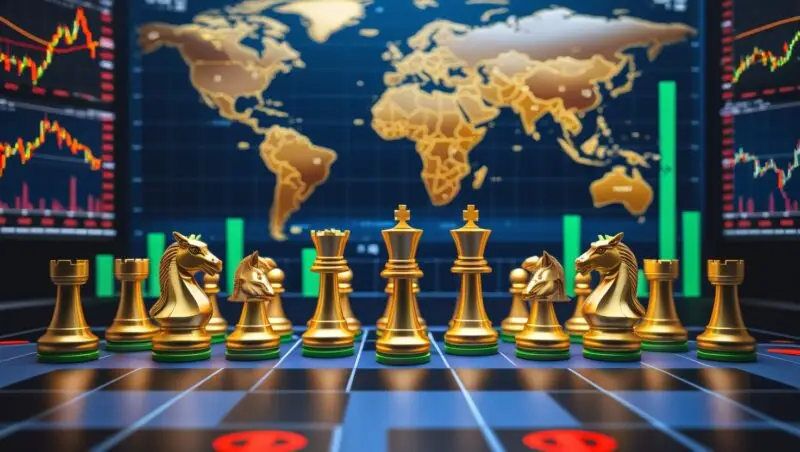
When superpowers play chess, the financial markets are the board. Every geopolitical move ripples through your portfolio faster than you can say “margin call.”
Commodities are going parabolic: Oil, gold, wheat – anything that moves through conflict zones is about to get expensive. The smart money’s already loading up. Are you?
Currency wars are heating up: The dollar, yuan, ruble – each one’s strength reflects their bloc’s power. Dollar strength isn’t guaranteed anymore, folks. Time to diversify that currency exposure.
Tech stocks are the new battleground: This isn’t about tanks and jets anymore. It’s about chips, AI, and cyber warfare. The tech companies from each bloc? They’re about to become the most important plays on the board.
Supply chain chaos equals opportunity: Strait of Hormuz, Suez Canal, Black Sea – when these trade routes get sketchy, everything gets more expensive. But if you’re positioned right, that chaos becomes your payday.
The British Playbook That's Still Running
Here’s some old-school wisdom: The US strategy comes straight from the British Empire playbook – divide and conquer. Keep everyone fighting each other so no one gets strong enough to challenge you.
China’s Belt and Road? That’s basically their middle finger to this strategy. They’re saying “we’re building our own club, with blackjack and hookers.” And that terrifies the establishment.
For traders, this creates a beautiful dilemma: Do you bet on the old system or the new one?
Smart money says: Why choose? Play both sides and let the market decide.
Reading the Tea Leaves
Right now, Iranian ballistic missiles are hitting Israeli soil. Those Tel Aviv sirens aren’t just news alerts – they’re real-time market indicators.
Israel’s got contingency plans to take out Iran’s nuclear facilities, even without direct US backup. That’s a high-risk, high-reward play considering Iran’s mountainous terrain. But here’s the kicker: US military tech is way more advanced than what we see on TV.
The B2 Spirit bomber’s first flight was back in 1989, and that’s just what they’ve shown us. When this advanced tech gets deployed in conflicts, defense stocks go absolutely bonkers.
Spotting the Setup
The mainstream media’s already starting to paint China as the bad guy – exposing sanctions violations, election interference, the whole nine yards. This isn’t random reporting. This is narrative building for what’s coming next.
As a trader, you need to watch for these patterns:
Geographic diversification: Don’t put all your eggs in one economic bloc’s basket. If East and West are heading for a collision, you want exposure to both sides.
Safe haven assets: Gold, silver, decentralized crypto – assets that don’t depend on any single government or banking system are about to become your best friends.
Strategic sectors: Energy, food, tech, defense – these sectors win regardless of who comes out on top in the global chess match.
Information asymmetry: Not insider trading (that’s illegal), but understanding geopolitical patterns before they become obvious to retail traders.
The Future Is Already Here
Too many traders still think geopolitics is “government stuff” that doesn’t affect their day trades. That’s dangerously naive thinking. We live in a connected world where a railroad in Asia can crash markets in America.
The question isn’t if there will be more conflicts – it’s when and where. The question isn’t if markets will be affected – it’s whether you’ll be positioned to profit from the chaos or get crushed by it.
This global chess game is already in motion. The pieces are moving. The only question left is: Are you going to play or just watch from the sidelines?
The War Portfolio: Sectors That Thrive in Chaos
Alright, let’s get tactical. When the world’s on fire, certain sectors don’t just survive – they absolutely print money. Here’s your conflict-proof playbook:
Defense & Aerospace: This one’s obvious but still undervalued by retail. Lockheed Martin, Raytheon, Northrop Grumman – these companies become ATMs when tensions rise. But don’t sleep on the smaller players either. The defense supply chain is deep, and everyone from drone manufacturers to cybersecurity firms gets a piece of the action.
Energy Infrastructure: Not just oil companies, but the pipes, refineries, and storage facilities. When trade routes get sketchy, energy security becomes national security. Think Kinder Morgan, Enbridge, Enterprise Products Partners. These companies control the chokepoints that keep the lights on.
Agricultural Technology: War disrupts food supply chains faster than you can say “wheat futures.” But here’s the play: companies that help produce food more efficiently become invaluable. John Deere, Archer Daniels Midland, Nutrien – they’re the picks and shovels of the food security gold rush.
Rare Earth Minerals: China controls 80% of rare earth processing. If tensions escalate, countries scramble for alternative sources. MP Materials, Lynas Rare Earths – these are the companies that could 10x when supply chains fracture.
Cybersecurity: Modern warfare is digital warfare. CrowdStrike, Palo Alto Networks, Fortinet – when nation-states start hacking each other, these companies become essential infrastructure.
Crypto: The Wild Card in Global Chaos
Now let’s talk about the elephant in the room – crypto. This asset class is still figuring out its identity during geopolitical conflicts, and that creates both massive opportunities and massive risks.
Bitcoin as Digital Gold: When traditional banking systems get weaponized (hello, SWIFT sanctions), Bitcoin suddenly looks like a pretty good alternative. We saw this play out when Russia got cut off from SWIFT – Bitcoin trading volume in rubles spiked 900%. But here’s the catch: Bitcoin still trades like a risk asset most of the time. When stocks dump, Bitcoin often dumps harder.
Stablecoins as Safe Havens: USDC, USDT – these become crucial when local currencies are collapsing. Look at what happened in Turkey, Lebanon, Argentina. When your national currency is toilet paper, dollar-pegged stablecoins become lifelines. The volume speaks for itself.
Ethereum and DeFi: Decentralized finance becomes attractive when centralized finance gets weaponized. But remember – most DeFi protocols are still experimental. High reward, higher risk. Only play with money you can afford to lose.
Privacy Coins: Monero, Zcash – these could see adoption when governments start tracking every transaction. But they’re also regulatory time bombs. Trade carefully.
The Crypto Volatility Play: Here’s the thing about crypto during conflicts – it’s schizophrenic. One day it’s a safe haven, the next day it’s dumping with everything else. The key is understanding that crypto amplifies whatever sentiment is dominating the market. Fear? Crypto dumps harder. Greed? Crypto moons harder.
Infrastructure Plays: Don’t just buy the coins – buy the companies building the infrastructure. Coinbase, MicroStrategy, Marathon Digital, Riot Blockchain. When crypto adoption accelerates due to geopolitical pressures, these companies benefit regardless of which specific coins win.
Want more mindset tips? Check out our Trader Psychology articles!
💎 Pro Trader Secret: Combine SMC strategies with emotional mastery—read ‘How to Control Emotions in Trading’ and unlock your true edge. (Your psychology + smart money = unstoppable!)
Bottom Line
Look, I get it. This geopolitical stuff can seem overwhelming when you’re just trying to make some gains on your positions. But here’s the reality check: The biggest moves in the market come from understanding the macro picture.
While retail traders are arguing about technical analysis and support levels, institutional money is positioning based on geopolitical intelligence. They’re thinking months and years ahead while most people are thinking days and weeks ahead.
The railroad that triggered this whole mess? It’s just the beginning. China’s not backing down. The US isn’t backing down. And caught in the middle are trillions of dollars in market cap that’s about to get redistributed.
The alpha is there for those who know where to look.
Stay liquid, stay diversified, and most importantly – stay informed. Because in this game, information isn’t just power. It’s profit.
Remember: In geopolitics, like in trading, the early bird gets the worm. The late bird gets liquidated. Don’t be the late bird.
This article does not constitute investment advice, but is intended to educate and share experiences. Always do your own due diligence and consult a qualified professional before making any financial decisions. Investing in emerging technologies involves significant risk.


Be the first to comment!